Illustrations are from “The Art of the Lotus Sutra,” Exhibition at Fo Guang Shan Buddha Museum, Kaohsiung. Originally from National Palace Museum, Taiwan, whose descriptive text is a key source for this blog.
One of the most important texts of Mahāyāna Buddhism, the Lotus Sutra played a key role in transmission of Buddhism in East Asia. It was composed in India around 1st century AD. The text was transmitted to China in 3rd century AD and from China to Korea and Japan.
The Sutra created its own iconography. One of its chapters, known as the “Universal Gate,” promoted the belief in Avalokiteśvara Bodhisattva, who took on the feminine form of Guanyin, and became one of the most iconic Buddhist deities in East and Southeast Asia. This shows how localization of Buddhist imagery played a crucial role in the propagation of the religion from India to other parts of Asia..
Below are the frontispieces of different editions of the Lotus Sūtra from the Song, Yuan and Ming dynasties
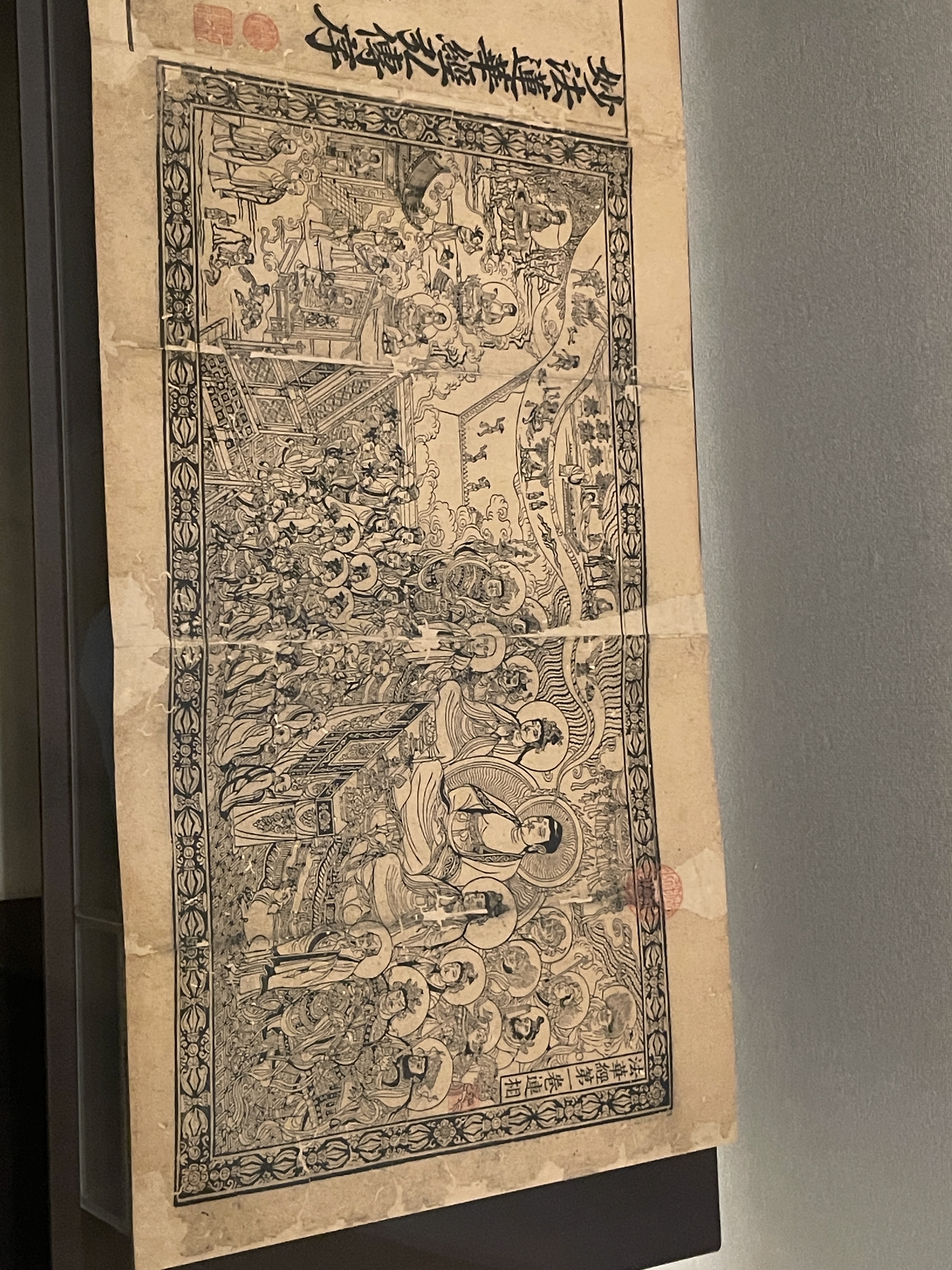
Volume 1 of The Lotus Sutra Translated by Kumarajiva (AD 344-413 or AD 350-409), Sixteen Kingdoms Period (304-439). Print in Su Shi’s calligraphic style, Song dynasty (AD 960-1279).
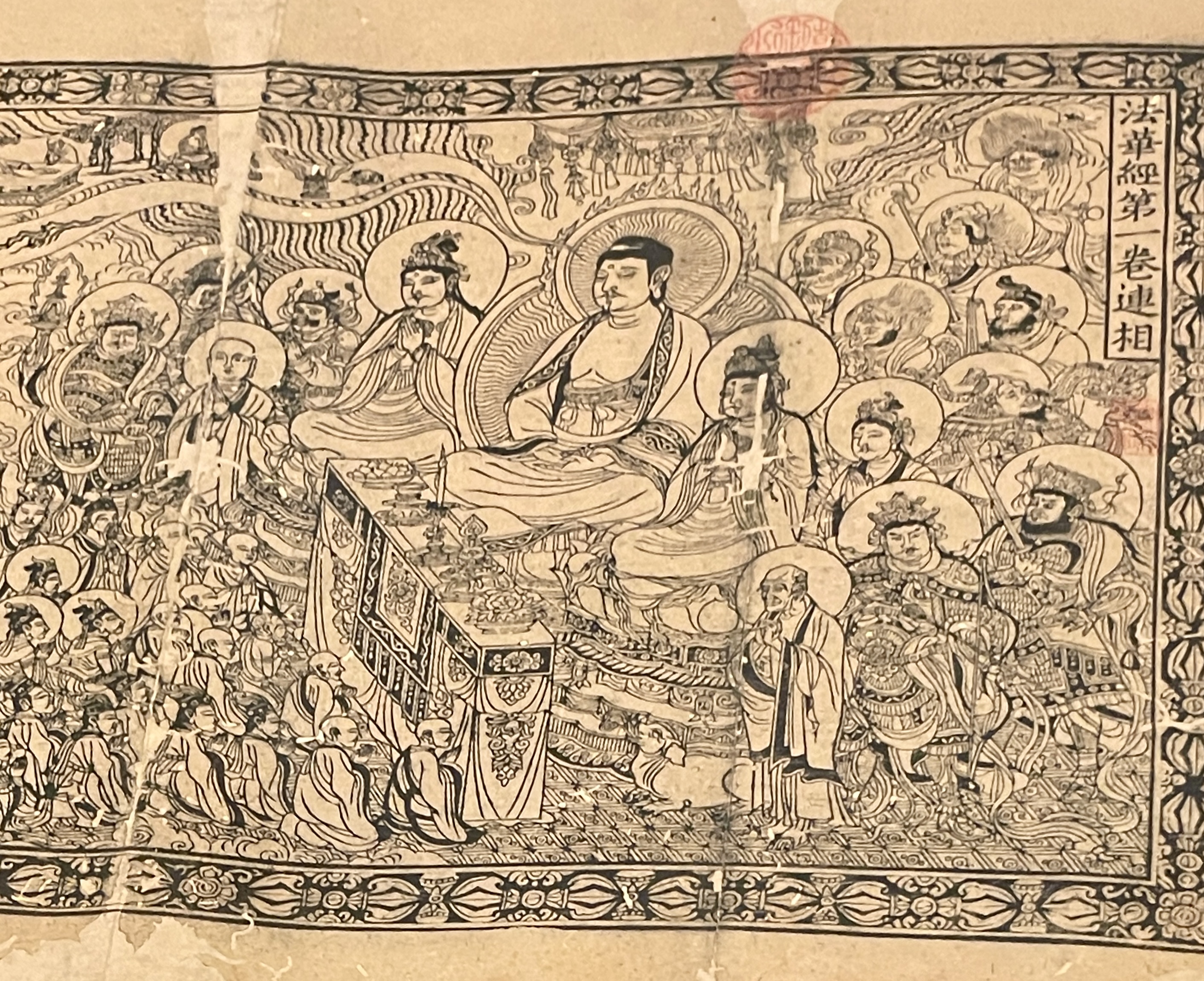
Volume 1 of The Lotus Sutra Translated by Kumarajiva (AD 344-413 or AD 350-409), Sixteen Kingdoms Period (304-439). Print in Su Shi’s calligraphic style, Song dynasty (AD 960-1279).
As Taiwan’s National Palace Museum exhibition explains, “The Lotus Sūtra can be roughly divided into three parts. In the first, Śakyamunī Buddha explains that all beings have the potential for Buddhahood. The second introduces the idea that the Buddha’s lifespan is immeasurable and encourages all beings to emulate bodhisattvas to save all sentient beings and to propagate the teachings of the Lotus Sūtra. The third focuses on various bodhisattvas, including Bhaiṣajyarāja and Avalokiteśvara, and tells the stories of their connection with the sūtra and how Avalokiteśvara saves sentient beings in different ways in order to inspire followers.”
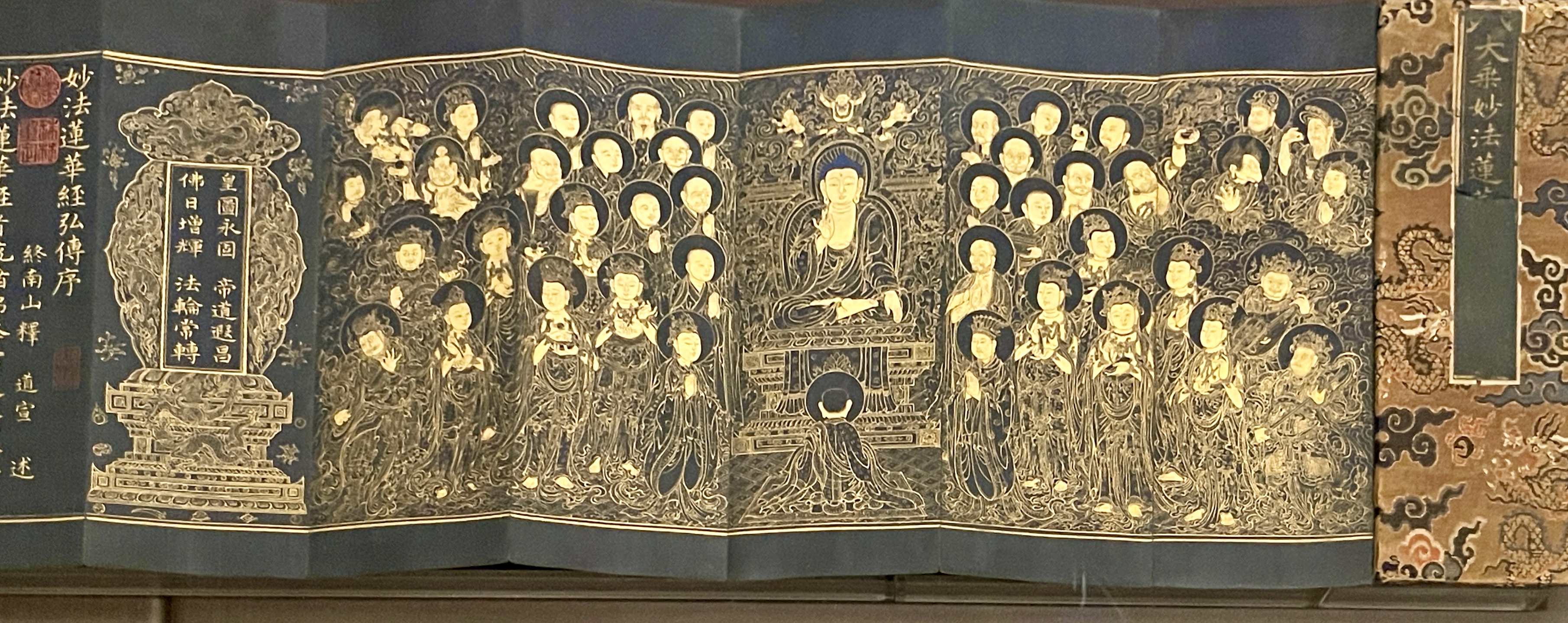
Lotus Sutra translated by Kumarajiva (344-413 or 350-409), Sixteen Kingdoms Period (304-439), unknown illustrator, Ming dynasty (1368-1644)
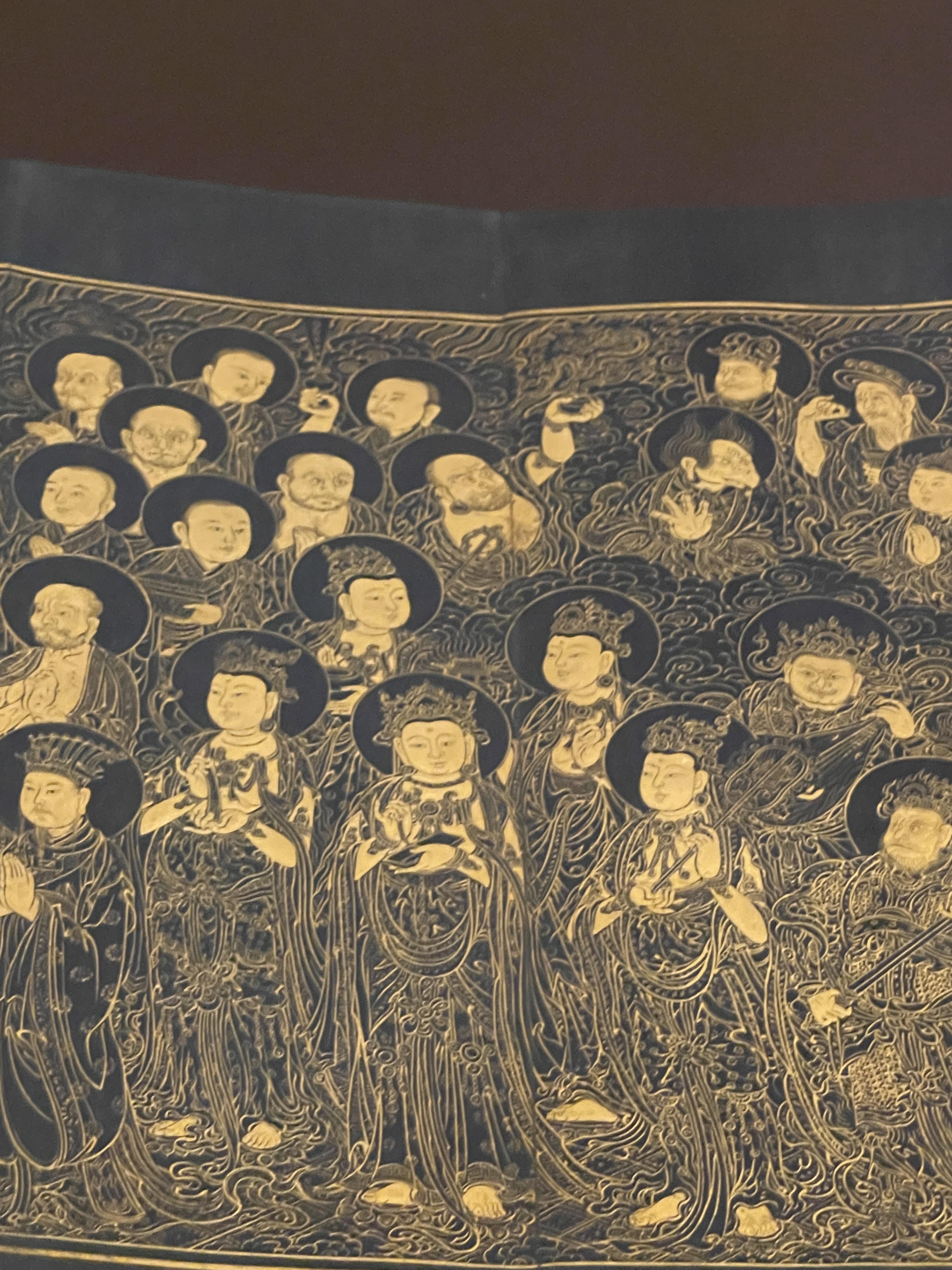
Lotus Sutra translated by Kumarajiva (344-413 or 350-409), Sixteen Kingdoms Period (304-439), unknown illustrator, Ming dynasty (1368-1644)
The Lotus Sutra became the chief inspiration and text for the Tiantai School, founded by Chinese scholar-monk Zhiyi (538–597), which in return inspired Japanese monk Saichō (767–822) who founded the Tendai school in Japan and and Korean monk Uicheon (1055–1101), the founder ot the Cheontae School. The sutra was translated into Tibetan, Tangut, Mongolian, and Manchu.
Summing up the importance of the Lotus Sutra, As Indian Scholar Nilanjan Bhowmick writes,
“Myth and history are in collusion in the Lotus Sūtra, inventive myths turning into vibrant history and hazy history turning into an illusory past. The book’s intention is to challenge the familiar world of early Buddhism. In that ancient world, there is the Buddha, his disciples, some wiser than others, some near enlightenment, some far. There are notions like karma, rebirth, the four noble truths, and dependent origination (nothing exists without a cause). These notions are not challenged by the Lotus Sūtra. What is challenged is the uniqueness of the Buddha, the exact meaning of his message, the state of wisdom of his disciples, and even, unusually, whether the Buddha attained parinirvāṇa (the final release from the karmic cycle upon death).”

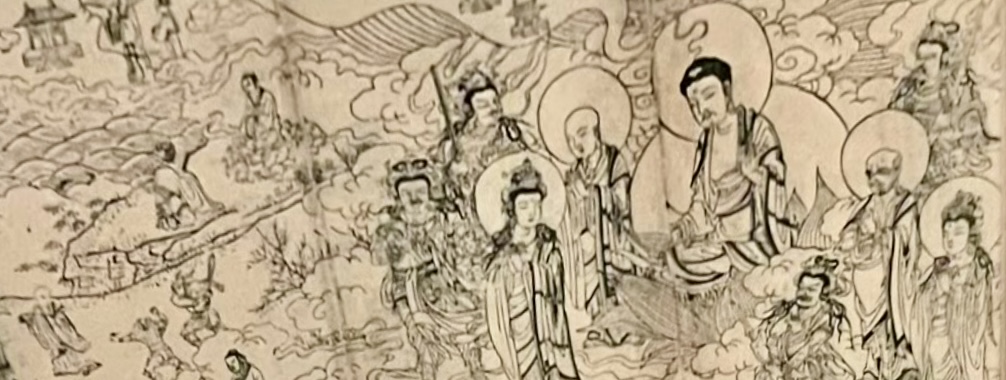
Volume 6 of The Lotus Sutra, Translated by Kumarajiva (344-413 or 350-409), Sixteen Kingdoms Period (304-439). Print in Su Shi’s calligraphical style, Zhejiang, Yuan dynasty (1271-1368)
 Multiplex World: Once & Future World Order